New Offices and Build-Outs
Mark works with businesses that need cabling for new offices and commercial build-outs, office moves and renovations, and new construction cabling.
Mark Sandmann provides structured cabling installation in Houston for businesses that need new network drops, CAT6 cabling, organized network infrastructure, additional connections for equipment, or a complete cabling system for a new or existing facility.
Call (832) 795-9163Business networks depend on the physical cabling that connects computers, phones, wireless access points, cameras, access control equipment, switches, and other devices throughout a property.
When you call, you speak directly with Mark about what needs to be connected and where. He helps determine the practical cabling approach and performs the work himself.
The goal is not simply to pull cable from one point to another. The cable type, route, termination points, network equipment, device locations, and future needs of the business all affect how the installation should be approached.
Call (832) 795-9163 to discuss your structured cabling project.
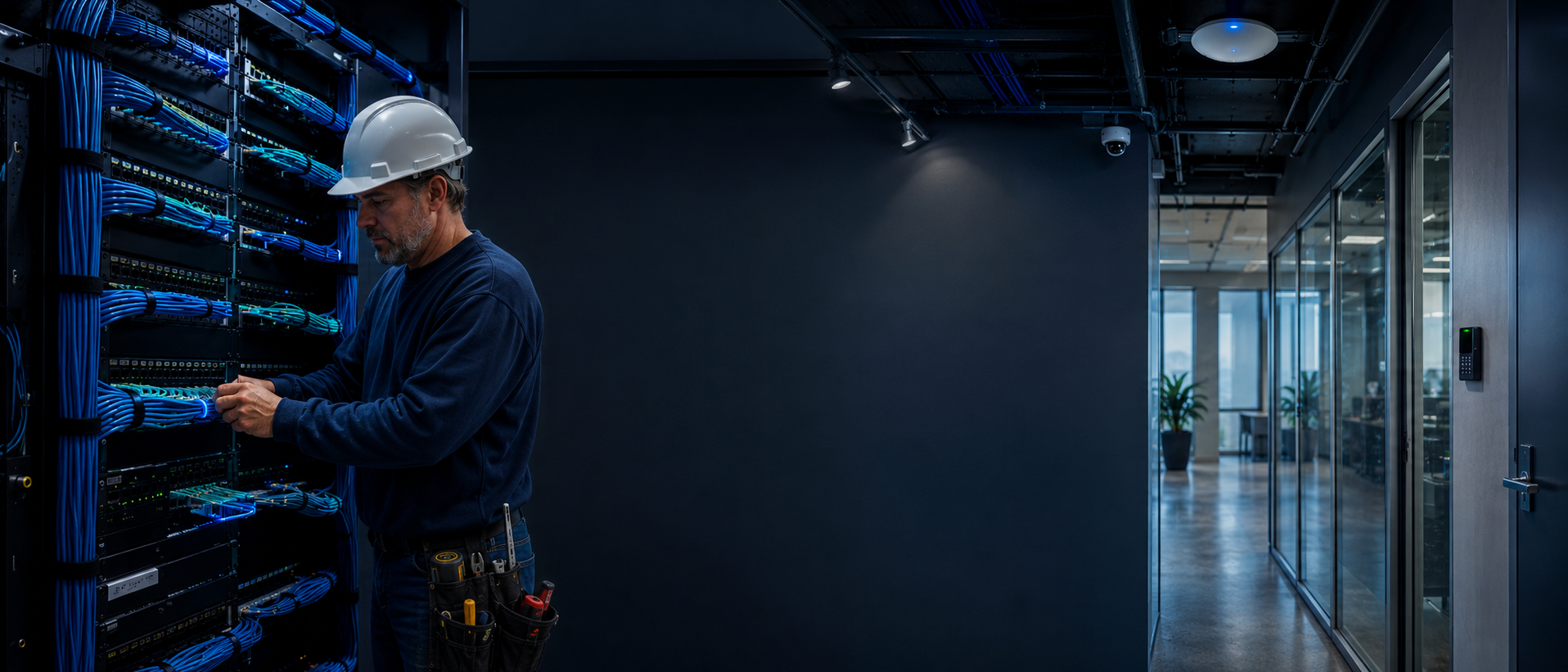
Mark works with businesses that need cabling for new offices and commercial build-outs, office moves and renovations, and new construction cabling.
Structured cabling may support additional workstations or network devices, new wireless access points, IP phone installations, and network closet upgrades.
Warehouse and industrial expansions may require cabling across larger spaces, operational areas, equipment locations, and different sections of a facility.
Structured cabling can support security camera connections, access control equipment, and other IP-based systems that need reliable network connectivity.
CAT6 cabling is commonly used for commercial Ethernet networks, workstations, phones, wireless access points, cameras, and other network-connected equipment. Mark can install CAT6 cabling for new network connections, additional device locations, office expansions, network upgrades, and complete cabling systems.
CAT6A may be considered for projects that require higher network performance, longer high-speed Ethernet runs, or infrastructure planned around more demanding network requirements. The right choice depends on the equipment, distance, installation environment, and what the business needs the network to support.
Many existing commercial properties still use CAT5e cabling. Mark can work with existing cabling and help determine whether new runs should match the current system or whether the project calls for a newer cabling approach.
Ethernet and data cabling connect devices back to the network infrastructure that supports the business. Common connections may include desktop computers, printers, IP phones, wireless access points, security cameras, access control equipment, network switches, and other IP-based devices.
A new workstation, phone, camera, access point, or other network device may require a new cable run and properly located outlet. Mark can install additional network drops in offices, warehouses, industrial facilities, commercial buildings, and other business environments.
Modern business phone systems often rely on the same structured cabling infrastructure used for the data network. Mark can install cabling for IP phone systems and help make sure the phone locations connect correctly with the network equipment supporting them.
Wireless networks still depend on wired infrastructure behind the scenes. Access points need properly planned network connections and power in the right locations. Mark can install cabling for wireless access points throughout offices, warehouses, and larger commercial facilities.
IP cameras require network connectivity and are often powered through the same Ethernet cabling using Power over Ethernet. Mark can install the cabling needed to connect camera locations back to the network and related security equipment. Related service: Security Camera Installation in Houston
Access control systems may require cabling for readers, controllers, door hardware, network connections, and other system components. Because Mark also works with access control systems, he can consider how the cabling supports the complete installation. Related service: Access Control Installation in Houston
Structured cabling needs an organized place to terminate and connect with network equipment. Patch panels provide an organized location for cable runs to terminate before connecting to network switches and other equipment. A properly organized patch panel can make future troubleshooting, maintenance, and network changes easier to manage.
Network racks and cabinets provide a central location for patch panels, switches, routers, and other network equipment. The right setup depends on the amount of equipment, available space, cable volume, and how the network may expand over time.
Disorganized cabling can make it harder to trace connections, replace equipment, troubleshoot problems, or add new devices. Mark can organize cabling around racks, patch panels, and network equipment so connections are easier to identify and maintain.
Clear labeling helps identify where cable runs begin and end. This is especially useful in larger offices, warehouses, and facilities with many network connections.
New construction gives businesses the opportunity to plan network infrastructure before walls, ceilings, and work areas are fully completed. Early planning can help determine where network rooms will be located, where workstations and devices need connections, where wireless access points should be installed, where cameras or access control equipment may need cabling, which cable pathways should be used, and how future expansion should be considered.
Office build-outs and renovations often create new cabling requirements as walls move, workstations change, and new equipment is added. Mark can work with the new layout to determine where network connections are needed and how the cabling should route back to the network infrastructure.
Existing buildings may require new cabling to be installed around finished walls, ceilings, existing pathways, occupied work areas, and older infrastructure. The practical installation route depends on the property and where the new connections need to go.
Businesses frequently need network cabling adjusted as employees move, departments expand, equipment changes, or new areas are added. Mark can add new cable runs, relocate connections, and help adapt the network cabling to the updated space.
When a network connection is not working properly, the problem may be related to the cable, termination, patch panel, outlet, equipment connection, or another part of the network. Mark can help evaluate the existing cabling and determine where the problem is coming from.
Businesses often need more network connections as they add employees, devices, cameras, phones, access points, or new areas. New runs should be planned around the existing network and where the equipment actually needs to connect.
Damaged, poorly terminated, or outdated cabling may need to be repaired or replaced. Mark can review the existing installation and help determine whether the practical next step is repair, replacement, or a larger cabling upgrade.
Over time, network closets can become difficult to manage as equipment is replaced and new cables are added. Organizing patch panels, cable paths, equipment connections, and labels can make the system easier to understand and maintain.
Testing helps confirm whether an installed cable run is connected correctly and can help identify problems with existing cabling. The type of testing depends on the project and what needs to be verified.
Some projects may require formal cable certification to verify performance against specific cabling standards. The required testing and documentation depend on the project scope.
Clear labels and basic documentation can help identify cable runs, outlets, patch panel locations, and network connections. This becomes increasingly important as the number of connected devices and cable runs grows.
Start by explaining the equipment, devices, work areas, or parts of the building that need network connections. You do not need to know the final technical solution before calling.
The route between the network equipment and device locations can affect the scope of the project. Mark considers the building layout, existing pathways, ceiling or wall access, network room locations, distances, and existing infrastructure.
The next step is determining what cable type fits the project and where outlets, patch panels, network equipment, and device connections need to be located.
Mark performs the agreed work himself and completes the installation based on the project requirements.
When you contact Mark Sandmann, you speak with the person who will help evaluate the project and perform the work.
You do not need to know exactly how many cable runs you need, which cable category to use, or how the network should be laid out before calling. Start by explaining what needs to be connected, where the equipment will be located, and what you want the network to support.
Mark's experience includes structured cabling, LAN/WAN networks, switches, routers, wireless access points, fiber optic networks, IP phones, security cameras, access control systems, and related network infrastructure. This allows him to consider how the cabling fits into the complete system instead of treating each cable run as an isolated task.
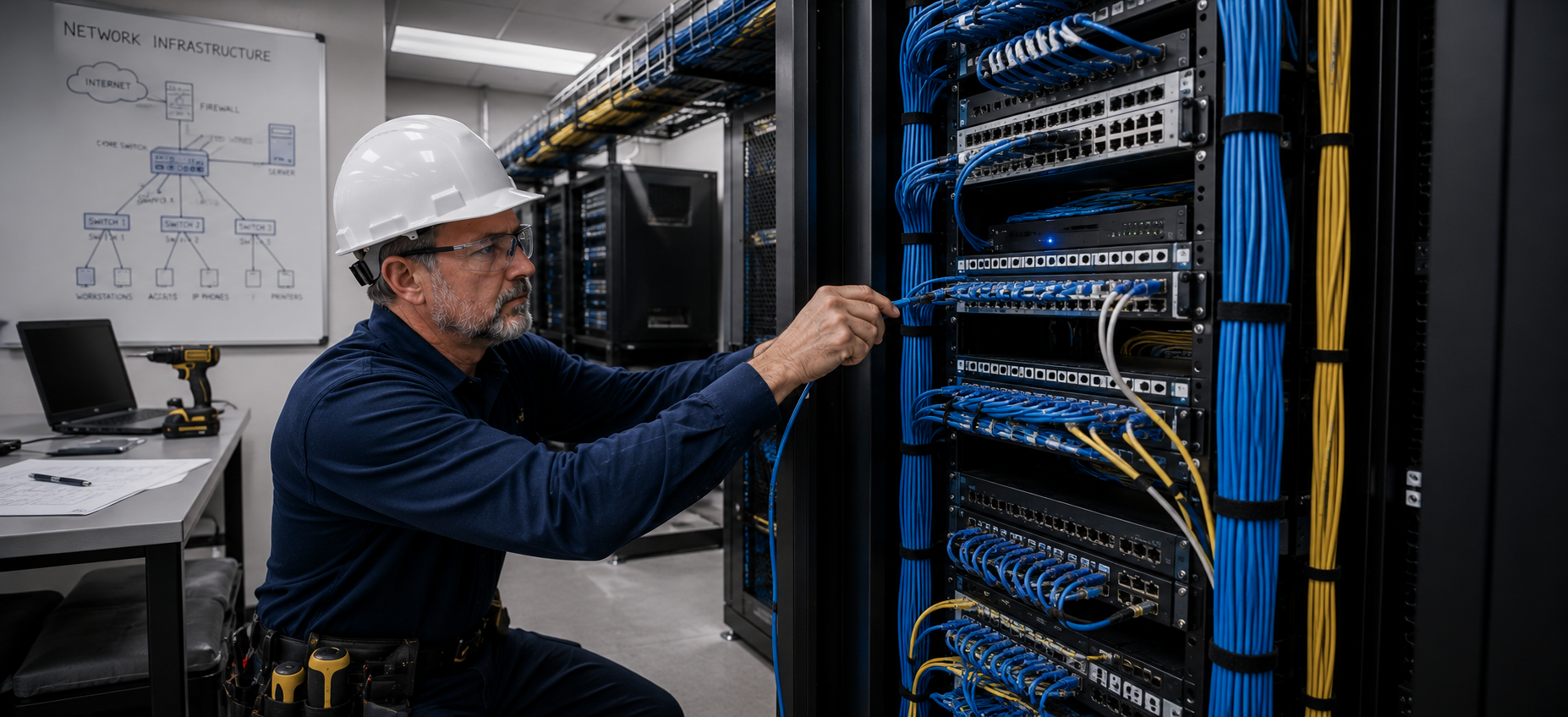
Warehouses and industrial facilities often have cabling needs that are different from a standard office.
Large physical spaces, longer cable routes, separate operational areas, equipment locations, network closets, wireless access points, security cameras, and multiple buildings can all affect the network design.
Structured cabling in these environments may support warehouse offices, workstations and printers, wireless access points, IP cameras, access control equipment, network switches, production or operational areas, and different sections of a large facility.
For longer distances or connections between major network areas, the project may also require fiber optic installation.
Structured cabling is one part of the larger network infrastructure a business depends on.
A complete system may include CAT6 or other Ethernet cabling, fiber optic cabling, patch panels, network racks and cabinets, switches and routers, wireless access points, IP phones, security cameras, and access control devices.
Because Mark works across these different areas, he can look at how the cable run, network equipment, and connected device fit together.
For example, a business may use fiber between major network areas and CAT6 cabling from local network closets to workstations, phones, cameras, and wireless access points.
Related service: Fiber Optic Installation in Houston
Mark is based in Houston and works with businesses throughout the Houston area.
Projects may include a few additional network drops, cabling for a new office, warehouse network expansion, network closet work, new construction, equipment connections, or a complete commercial cabling installation.
Have a project elsewhere in Texas? Contact Mark to discuss the location and scope.
Available 24 hours, Monday through Sunday.
Mark works with commercial and industrial properties in the Houston area, including offices, warehouses, larger facilities, build-outs, and businesses that need new or expanded network connections.
Yes. Mark installs CAT6 structured cabling for business networks, workstations, wireless access points, IP phones, cameras, and other connected equipment.
Yes. Mark can add cable runs and network drops for new workstations, phones, printers, cameras, access points, and other devices in existing commercial properties.
Yes. Mark works with wireless networking, IP camera systems, and the cabling infrastructure needed to connect those devices back to the network.
Yes. Structured cabling projects may include patch panels, racks or cabinets, cable organization, equipment connections, and network closet work.
Yes. Mark can help evaluate existing cabling and determine whether a connection problem is related to the cable, termination, outlet, patch panel, equipment connection, or another part of the network.
Yes. Mark provides fiber optic installation for projects that require longer distances, higher-capacity backbones, building-to-building connections, or other fiber network infrastructure.
You will work directly with Mark Sandmann. Mark discusses the project with you, helps determine the practical approach, and performs the work himself.
Available 24 hours, Monday through Sunday
Houston, Texas
Need new network drops, CAT6 cabling, an expanded network, cabling for a new office or warehouse, or help with an existing cabling problem?
Share a few details about the service you need and the best way to reach you.